
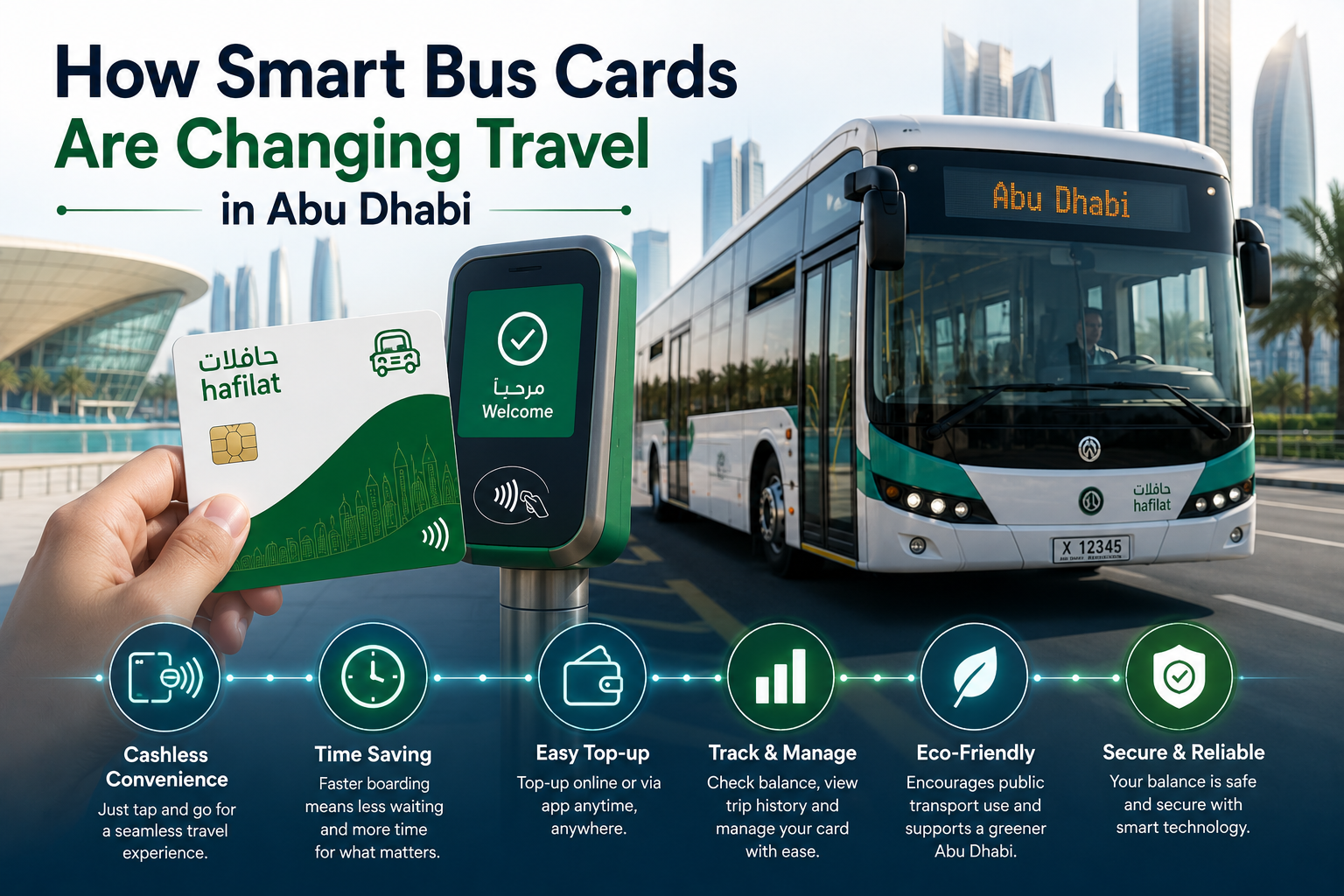
How Smart Bus Cards Are Changing Travel in Abu Dhabi
Abu Dhabi has never been a city content with standing still. From its skyline to its roads, the emirate is in a constant state of forward motion and nowhere is this transformation more visible to everyday residents and visitors than in how people pay for and manage their public transport journeys. At the center of this shift is a small but powerful piece of technology: the Hafilat smart card.
If you use Abu Dhabi’s public buses, knowing how to do a hafilat balance check is no longer just a convenience; it is part of a larger, city-wide movement toward smarter, greener, and more efficient urban mobility. This article explores how the Hafilat smart bus card has fundamentally changed the commuting experience in Abu Dhabi, why it matters for the city’s long-term vision, and what the future of public transport looks like for the millions of people who call this emirate home.
The Problem Smart Cards Were Built to Solve
To appreciate how far Abu Dhabi has come, it helps to understand the problem that smart bus cards were designed to fix.
Before the Hafilat system was introduced in May 2015, public bus passengers in Abu Dhabi paid their fares in cash coins and notes handed directly to drivers or deposited into fare boxes on boarding. This created a predictable set of problems that anyone who has ridden a cash-based bus system will recognize immediately:
- Boarding delays caused by passengers searching for exact change
- Revenue leakage from uncollected or underpaid fares
- No data on passenger volumes, route usage, or travel patterns
- No inclusivity features such as discounts for students, seniors, or people of determination
- No accountability once cash entered the system, it was difficult to track or audit
These inefficiencies weren’t just inconvenient. They were fundamentally at odds with Abu Dhabi’s ambitions to become one of the most liveable, sustainable, and technologically advanced cities in the world. A cash-based bus system was a legacy infrastructure problem and the Hafilat card was the answer.
What the Hafilat Card Is and How It Works
The Hafilat card is a smart, contactless bus card introduced by the Abu Dhabi Department of Transport. The word “Hafilat” means “bus” in Arabic, reflecting its primary purpose of simplifying public transport payments. With this card, passengers can board Abu Dhabi buses and pay their fares electronically by simply tapping their card on the reader when boarding and alighting. The fare is calculated electronically when the card is tapped at the start and end of the trip.
Cash payments are not accepted on Abu Dhabi buses. Introduced by the DMT (Department of Municipalities and Transport) in Abu Dhabi, the Hafilat Card is a rechargeable smart card that serves as a digital wallet for public bus fares, enabling cashless transactions and improving efficiency in the transportation network. The technology behind the card is straightforward but powerful. Each card is linked to a prepaid account balance that is deducted automatically based on the zones traveled. The Abu Dhabi bus fare is calculated using a zone-based system.
Abu Dhabi is divided into travel zones, and the fare depends on the number of zones crossed during a journey. The minimum fare is AED 2 for one zone. This distance-based fare calculation automatic, accurate, and instant was simply not possible under a cash system. It is one of the most tangible ways the smart card has improved fairness and efficiency for passengers across the city.
How the Hafilat Card Changed the Daily Commute
Faster Boarding and Less Congestion at Bus Stops
The service facilitates the payment of trip fares efficiently through the automatic calculation of fares based on distance traveled saving passengers time, effort and money. When passengers tap their card instead of fumbling for coins, boarding times drop dramatically. Multiplied across thousands of daily bus journeys, this improvement means buses spend less time stationary at stops reducing delays for everyone on board and improving overall route performance.
Cashless Convenience for a Diverse Population
Abu Dhabi is one of the most ethnically diverse cities on Earth. Its population includes millions of expatriate workers, students, professionals, tourists, and long-term residents from over 200 nationalities. A cashless smart card system cuts through the friction of currency exchange, exact change requirements, and language barriers at the point of payment. This is a contactless, rechargeable digital smart card that lets you pay for bus fares with cashless public transport. All you have to do is tap the Hafilat Bus Card on the reader at the time of departure and alighting, and the fare for the transport you use will be automatically deducted from the card.
Tailored Cards for Every Passenger Type
One of the most socially significant aspects of the Hafilat system is its inclusivity. Unlike a single-tier cash system, the Hafilat program offers specialized cards designed for specific groups:
Student Card: Offered at a significantly discounted rate, this blue card is available to registered students in Abu Dhabi, providing them with cheaper travel throughout the academic year. Students can save up to 50% on regular transportation costs.
Senior Citizen and People of Determination Card: These special cards provide free or heavily subsidized travel for eligible senior citizens and people of determination, ensuring mobility and accessibility for all community members.
Visitor’s Card (Red): Designed specifically for tourists, this card may offer unlimited travel for a shorter, fixed number of days, making it perfect for exploring the city’s sights.
These tiered card types reflect a broader social policy goal: making public transport genuinely accessible to every segment of the population, not just those who can afford the standard fare.
Period Passes for Frequent Travelers
Beyond pay-as-you-go credit, Hafilat passes are actually prepaid; they are not rechargeable but offer a cost-effective traveling solution, allowing people to enjoy unlimited rides within the pass’s duration without having to pay again and again. They are available in different types like monthly passes, weekly passes, and specific category passes.
A 30-day pass is available at subsidized rates of AED 80 for eligible beneficiaries. For anyone commuting daily to work, school, or university, a monthly pass can represent savings of hundreds of dirhams per year compared to individual fare deductions.
The Role of Data in Abu Dhabi’s Smart Transport Ecosystem
One of the least visible but most powerful changes the Hafilat card brought to Abu Dhabi’s transport system is data.
Every tap on a Hafilat card validator generates a data point: which bus, which stop, what time, which route, how far. Aggregated across millions of daily journeys, this information gives transport planners an unprecedented window into how people actually move around the city.
Within one year of implementation of smart transport systems in Abu Dhabi, significant improvements were realized: commute times reduced by 25% across high-congestion corridors through real-time routing and traffic signal optimization, and public transport usage increased by 20%, with the mobile app serving over 100,000 active users within six months.
This kind of data-driven decision-making was simply impossible when fares were paid in cash. Today, Abu Dhabi’s transport authority can identify underserved routes, predict peak demand, optimize bus schedules in real time, and plan future infrastructure based on verified travel patterns rather than estimates.
The Hafilat smart card supports Abu Dhabi’s smart city system; it helps Abu Dhabi manage public transport data and planning digitally. This data layer is foundational: it connects individual card taps to city-wide planning decisions, making the Hafilat card not just a payment tool but a component of Abu Dhabi’s broader urban intelligence infrastructure.
Managing Your Card: The Modern Commuter Experience
The experience of managing a Hafilat card in 2026 is vastly different from what it was at launch. The digital ecosystem surrounding the card has expanded significantly, giving users multiple convenient ways to stay on top of their balance and recharge.
The Darb App is the official mobile application for Abu Dhabi’s public transport system. It offers the most convenient way to check your Hafilat balance on the go, with additional features like trip planning and online recharge. Users can add their Hafilat card, view their current balance, transaction history, and card expiry date on the dashboard, and enable notifications to get alerts when the balance drops below AED 10.
For those who prefer not to use a dedicated app, the USSD code *163# provides an instant balance check via SMS/USSD menu. This method works on all mobile networks in the UAE both Etisalat and du.
Recharging is equally flexible. There are many convenient options to recharge your Hafilat card, including sales and recharge machines at bus stations and bus stops where the balance reflects immediately, Customer Happiness Centers at bus stations, and MBME recharge machines available at commercial buildings and centers.
The maximum amount that can be recharged at once is AED 150, with a validity period of three months from the recharge date, an important detail for infrequent travelers who want to top up a larger amount less often.
Abu Dhabi’s Bigger Vision: Where the Hafilat Card Fits In
The Hafilat card is not an endpoint; it is a building block in a far more ambitious vision for transportation in Abu Dhabi.
The Integrated Transport Centre (ITC), now operating under the brand identity Abu Dhabi Mobility (AD Mobility), signals a new era in transportation, a dynamic force shaping the future of movement. Environmental sustainability is a core mandate, with plans ranging from electrifying public buses to introducing water taxis, trams, Autonomous Rail Rapid Transit, and expanding cycling lanes.
Bus Route 65, which links Marina Mall and Al Reem Island and serves around 6,000 passengers daily, has been converted into a hydrogen- and electric-powered route. This initiative is part of Abu Dhabi’s broader plan to transform Abu Dhabi Island into a green public transport zone by 2030.
The Municipal and Transportation Authority has announced a multi-billion dirham investment program estimated to cost AED 42 billion focusing on infrastructure, housing, sustainability, and smart mobility in the emirate. This investment signals that the transformation begun with the Hafilat card is far from over. It is accelerating.
Abu Dhabi’s Surface Transport Master Plan (STMP) aims to position Abu Dhabi as one of the most sustainable transport hubs in the Middle East by 2030, blending innovation with a people-first approach. Abu Dhabi is moving from car ownership to mobility as a service (MaaS) where getting from point A to point B is effortless, affordable, and sustainable.
The Abu Dhabi Metro project is estimated to facilitate above 800,000 passengers per day in 2030. When this metro network comes online, the Hafilat card and its associated digital infrastructure will almost certainly be the payment backbone, the same tap-and-go system that millions of Abu Dhabi commuters already know and use, extended to a completely new mode of transport.
Smart Cards vs. Cash: A Before-and-After Comparison
| Aspect | Cash-Based System | Hafilat Smart Card System |
| Boarding speed | Slow change counted manually | Fast single tap, instant deduction |
| Fare accuracy | Prone to errors and underpayment | Zone-based, automatic, precise |
| Passenger data | None | Rich, real-time usage data |
| Inclusivity | Flat rate for all | Discounts for students, seniors, PWDs |
| Fraud risk | High cash hard to audit | Low every transaction is recorded |
| Balance management | Not applicable | Online, app, SMS, TVM |
| Environmental impact | Paper tickets, manual processes | Paperless, digital, sustainable |
How the Hafilat System Compares Across the UAE
Abu Dhabi’s Hafilat card is part of a broader pattern of smart card adoption across the UAE. The Hafilat system is more than a bus payment card; it represents Abu Dhabi’s commitment to digital mobility and sustainable transport. This initiative aligns with other smart systems across the Emirates, such as Dubai’s Nol card, Ras Al Khaimah’s RAKBUS, and Sharjah’s Sayer, building a cohesive digital transportation network nationwide.
Each emirate has developed its own smart card system suited to its transport network, but the underlying principle is consistent across all of them: replace cash with contactless, data-generating smart payment technology to make public transport faster, fairer, and more efficient. Abu Dhabi’s Hafilat system stands out for its inclusive card tiers, its integration with the Darb digital platform, and its alignment with one of the most ambitious urban sustainability plans in the region.
Practical Tips for Getting the Most From Your Hafilat Card
Whether you are new to Abu Dhabi or a long-time resident looking to optimize your commute, these practical tips will help you use the Hafilat system to its full potential:
- Always check your balance before leaving home. Make it a habit to do a Hafilat balance check before leaving. This prevents last-minute issues and ensures you have enough credit for your trip. Checking your balance regularly helps you plan your travel expenses better and avoid service interruptions.
- Choose the right card for your situation. If you are a student, senior citizen, or person of determination, make sure you are using the card type that entitles you to discounted or subsidized travel. Using a standard card when you qualify for a reduced-fare card means you are paying more than you need to.
- Consider a monthly or weekly pass. If you use the bus every working day, a monthly pass at AED 80 for eligible travelers will almost certainly cost less than daily deductions. Do the math based on your usual routes and decide whether a pass or pay-as-you-go makes more financial sense.
- Register your card. Registering your Hafilat card by linking it to your Emirates ID protects your balance in case the card is lost or damaged. An unregistered anonymous card cannot be replaced if lost. Personalized cards protect your balance and provide access to additional services like online balance checking and auto-reload.
Use the Darb app for full card management. The official Darb app gives you real-time balance updates, transaction history, trip planning tools, and online recharge all in one place. It is the most comprehensive way to manage your Hafilat card without visiting a physical location.
Final Thoughts
The Hafilat smart bus card is much more than just a convenient way to pay for a bus ride. It is a key part of Abu Dhabi’s transformation into a smart, data-driven, and sustainable city that prioritizes public transport as an essential part of daily life for residents and visitors alike. From reducing the inefficiencies of cash payments to generating valuable data that helps improve transport planning, the Hafilat system marks a major step forward in modern urban mobility. Understanding the different Hafilat card types is also important for commuters, as each option is designed to meet the needs of various passengers.
With AED 42 billion being invested in infrastructure, electric buses already operating, a metro system planned for the future, and the city aiming to become a green public transport zone by 2030, the role of the Hafilat card will continue to expand. For commuters today, the message is simple: use the card, keep it topped up, and tap with confidence knowing you are part of one of the Middle East’s most forward-thinking public transport systems.